Digital Experiences
« BackTablet Application Redesign
Company: CleverDevices
Role: UX Design • UI Design • Interaction Design • Product Design
Tools: Figma • Adobe XD • User Flow Mapping • Wireframing • Prototyping
April 4, 2024 at 8:39 pm
Tablet Application Redesign
Company: CleverDevices
Role: UX Design • UI Design • Interaction Design • Product Design
Tools: Figma • Adobe XD • User Flow Mapping • Wireframing • Prototyping
April 4, 2024 at 8:39 pm
The Challenge
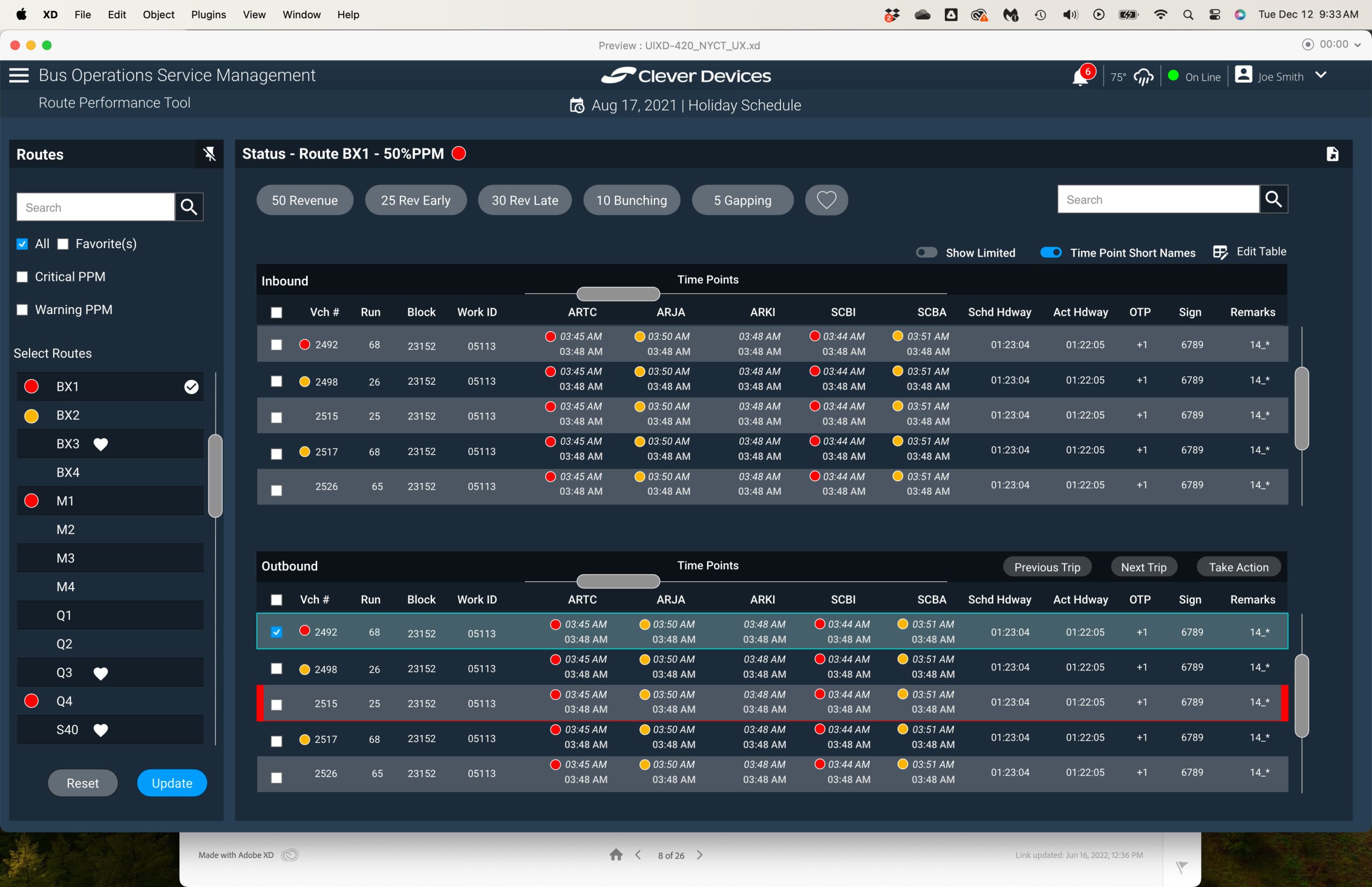
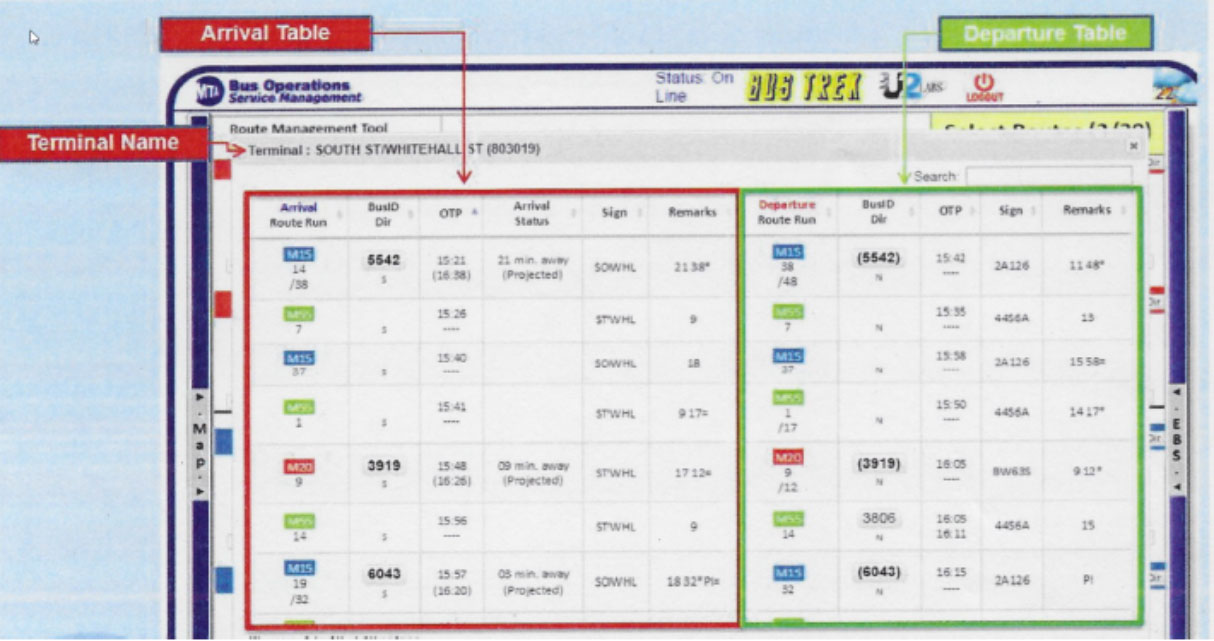
Clever Devices was brought in to redesign an internal tablet application used by NYCT field operators after the agency recognized improvements made across other transit products. The existing application suffered from an outdated interface, fragmented workflows, and inefficient data entry processes that slowed operators in the field.
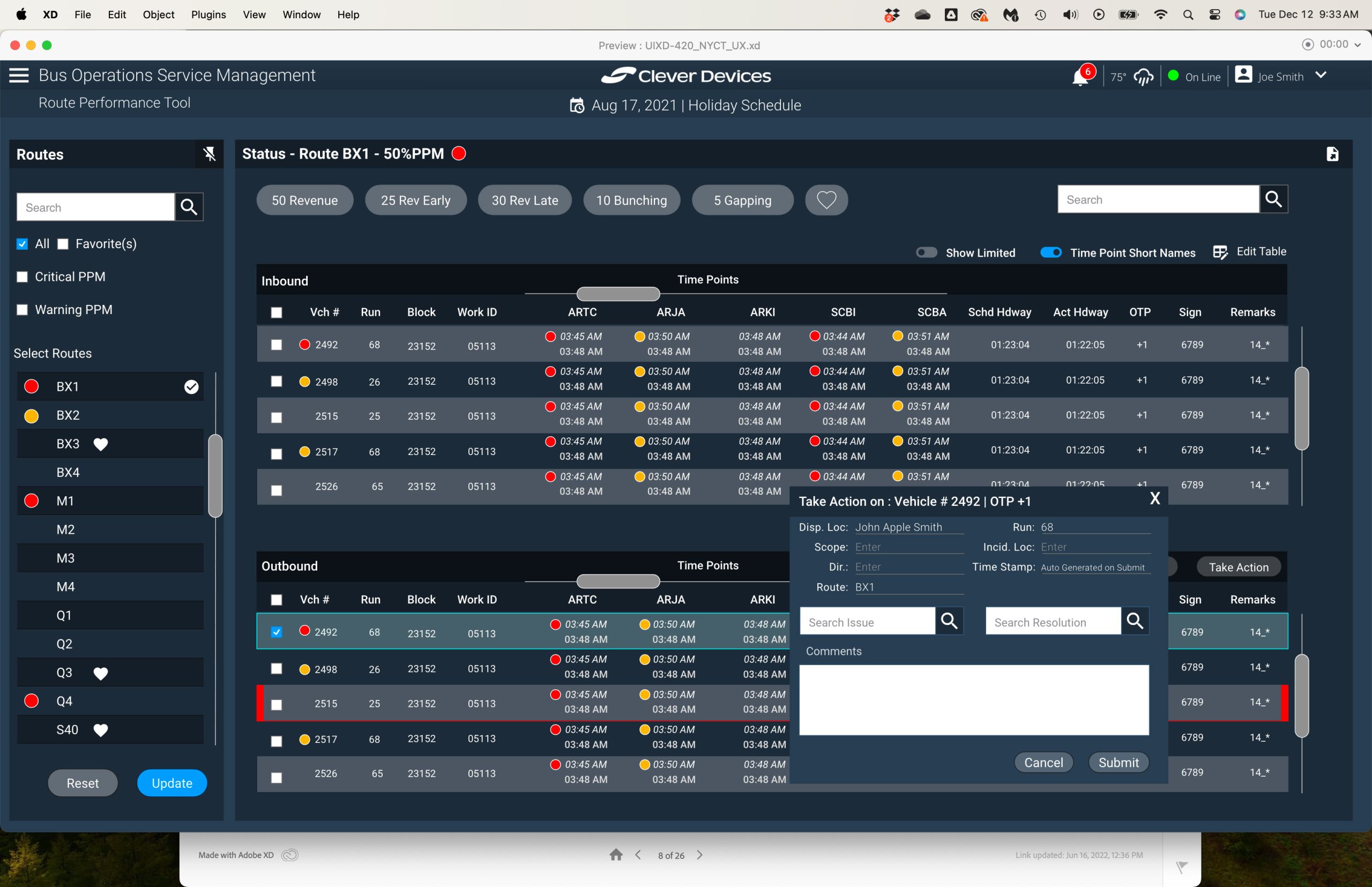
One of the biggest usability issues involved logging vehicle problems and resolutions. In the legacy system, users were forced to navigate across multiple screens and dependent dropdown menus to complete a single task, making the process time-consuming and difficult to manage efficiently in fast-paced operational environments.
The goal of the redesign was to simplify workflows, modernize the user experience, and significantly reduce the time required for field operators to document and resolve vehicle issues.
The Approach
The redesign focused heavily on simplifying interaction patterns and reducing unnecessary steps throughout the application. Working closely with the project team, we restructured the workflow into a more streamlined and user-friendly experience centered around efficiency and clarity.
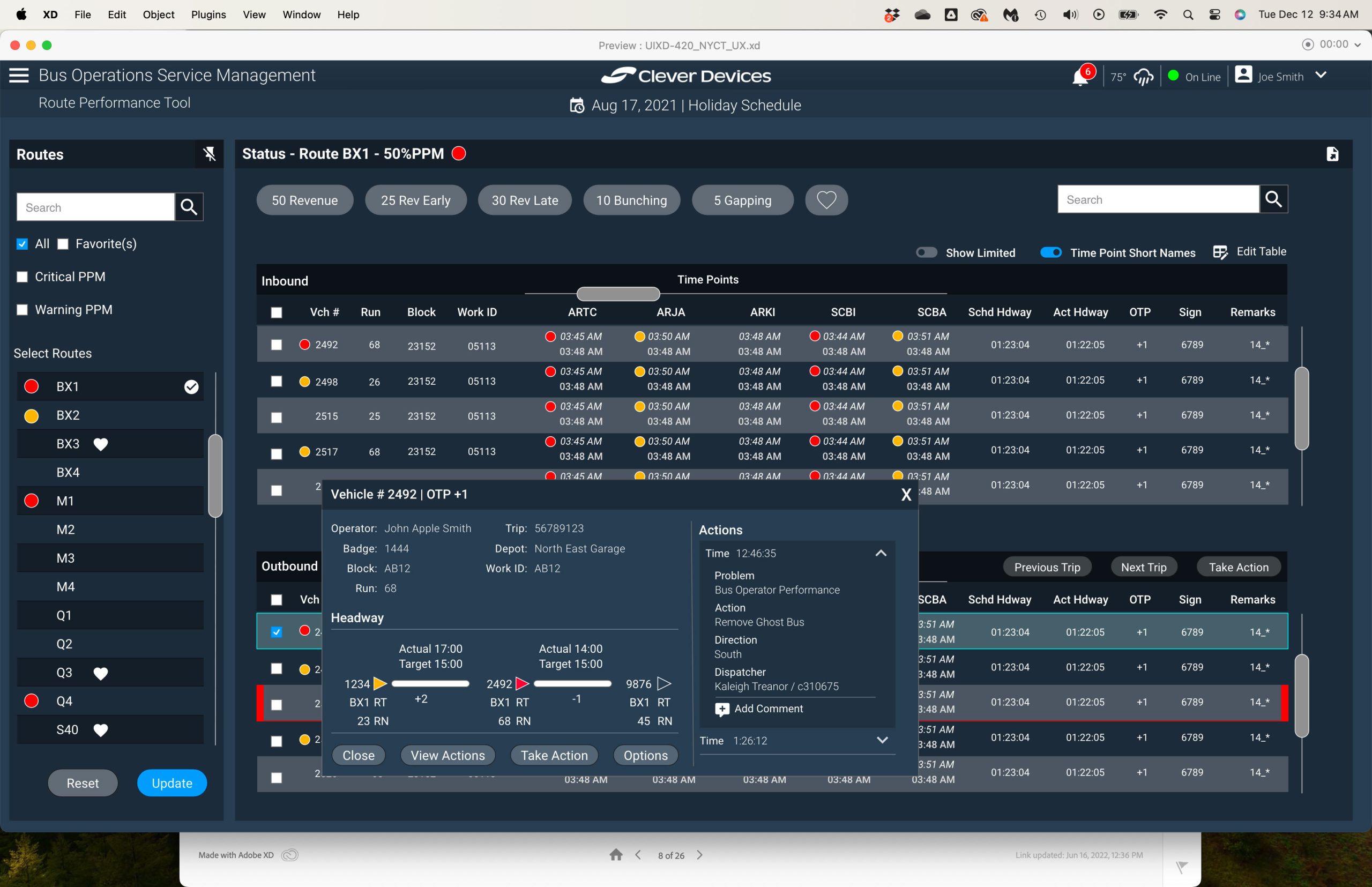
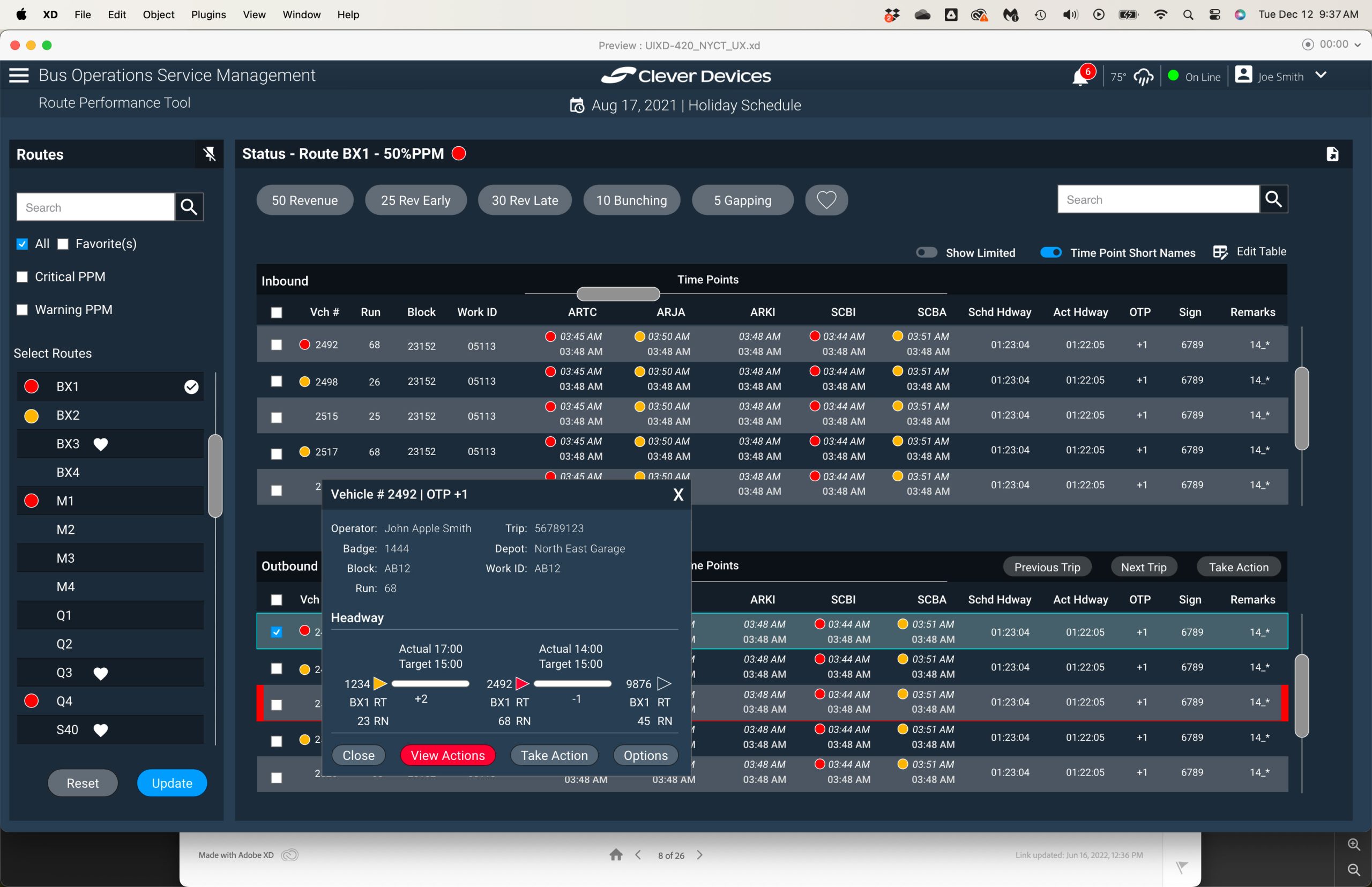
One of the most impactful improvements was consolidating a previously fragmented multi-screen process into a single contextual modal workflow preloaded with relevant vehicle and operational data. To further improve speed and usability, we replaced complex dependent dropdown structures with predictive type-ahead search functionality using agency-approved issue and resolution lists.
The interface itself was modernized with a cleaner visual hierarchy, improved spacing, clearer information architecture, and touch-friendly interaction patterns optimized for tablet use in field conditions.
Through iterative refinement and usability-focused thinking, the redesign emphasized simplicity as a way to improve both speed and accuracy for operators in real-world environments.
The Outcome
The redesigned application represented a substantial improvement over the legacy system, creating faster and more intuitive workflows for NYCT field operators. By reducing interaction complexity and minimizing navigation friction, the updated experience significantly streamlined the process of reporting and resolving vehicle issues.
The project generated strong enthusiasm among stakeholders and project owners, who were eager to present the redesigned experience to NYCT as a major advancement over the existing product.
A key takeaway from the project was the measurable value of simplifying complex systems. Replacing multiple dependent workflows with predictive search and contextual interfaces demonstrated how thoughtful UX decisions can dramatically improve efficiency in operational environments.